Prepared by Messenger Staff
Tbilisi court sentences Irakli Okruashvili in Robakidze killing case
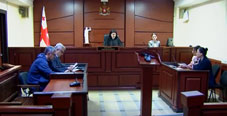
The Tbilisi City Court has sentenced former Defense Minister Irakli Okruashvili to seven years in prison for abusing his authority during the handling of the 2004 killing of 19 year old Amiran Robakidze. Okruashvili served briefly as Interior Minister at the time. He will ultimately serve four years and five months, since part of the sentence is covered by amnesty and reduced by time he spent in detention in the 2019 Gavrilov Night case and his current pretrial custody.
The court also ruled on the charges against former Prosecutor General Zurab Adeishvili, who oversaw the initial investigation. Adeishvili was acquitted. He has lived in Hungary since 2012 and has been sought by Georgian authorities since 2013, although Interpol cancelled its red notice for him in 2015.
The charges against both men were filed in 2019. Prosecutors alleged that Okruashvili ordered senior Interior Ministry officials to disguise the circumstances of Robakidze's death. Investigators stated that after learning a patrol officer had shot the young man during a late night vehicle check, ministry officials presented the case as an attack by an armed group. Prosecutors said weapons were planted in the car carrying Robakidze and his friends to support the false account.
Robakidze was killed on November 23, 2004. The initial self defense claim collapsed when patrol officer Grigol Bashaleishvili admitted he had fired accidentally. He was convicted of negligent murder in 2006.
The case was reopened in 2013, and several former Interior Ministry officials were convicted five years later for exceeding their powers. Robakidze's family has continued to call for full accountability for those involved in fabricating evidence and shaping the public narrative.
Georgia criticizes EU decision to postpone Human Rights Dialogue
Georgia's Ministry of Foreign Affairs has sharply criticized the European Union for postponing the annual EU Georgia Human Rights Dialogue, calling the decision "regrettable" and saying it came despite Georgia's full readiness to hold the meeting. In a statement on November 19, the MFA said the EU's explanation was "entirely unacceptable and unjustified."
The Foreign Ministry warned that the move fuels doubts about Brussels' intentions. It said that "using this development for further speculation only deepens reasonable doubts and reinforces the perception that the European External Action Service may have lacked genuine motivation to convene the meeting, and that Brussels may not be prepared to hear Georgia's fact based positions." The ministry added that these positions include issues previously cited by the EU as reasons for suspending political dialogue.
Georgia had viewed the Human Rights Dialogue as a chance to restart engagement after the EU Council's June 27, 2024 conclusions, which resulted in political dialogue being paused at all levels. The meeting had been set for November 21 in Brussels but was postponed indefinitely. Commission spokesperson Anitta Hipper said the decision followed "impediments from the Georgian side".
The MFA said Georgia had carried out "extensive substantive work" ahead of the meeting and had prepared detailed information for every agenda item. It also said the delegation was assembled with input from all relevant state bodies to ensure a "comprehensive and meaningful exchange."
Despite its criticism, the Foreign Ministry said Georgia remains committed to dialogue with the EU. According to the statement, the country "remains firmly committed to constructive engagement and continues to believe that there is no alternative to dialogue between partners." The ministry added that Georgia is ready to resume talks in various formats once the dialogue suspended by Brussels is fully restored.