Prepared by Messenger Staff
Khidasheli Urges Government to Release Evidence if BBC Report Is False
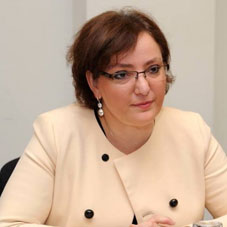
Former Defense Minister Tina Khidasheli sharply criticized the government's reaction to the BBC's recent investigative documentary, arguing that labeling it as "fake news" only highlights the lack of evidence to counter the reporting.
Khidasheli wrote that "the baseless claim of 'fake news' on BBC only proves that you are a lying abuser, have nothing to say, and your only weapon is to insult." She added that if the authorities possess information contradicting the investigation, "publish the facts."
According to Khidasheli, disproving the BBC report would be straightforward. "Proving this truth with documents is very easy," she said, noting that major international media outlets would willingly give space to credible evidence. She argued that "when such a major media outlet dedicates an hour-long documentary to you, simply shouting 'fake news' is an insult to your country and people."
Khidasheli said that "a ruler who respects their country and people would publish the facts if such a truth exists." Instead, she claimed, officials resort to attacking critics because they cannot offer substantive answers. "They have no answers to our fact-based reports, calling us traitors or agents, nor do they respond to the BBC's documentary. They just shout 'fake news,'" she wrote.
She also pointed to conflicting statements within the Interior Ministry. "Their former minister confirms, the current minister denies, and the shared deputy of the former and current ministers has confirmed multiple times," Khidasheli said, adding that "clearly, they are having a rough week."
Khidasheli said that the government could easily resolve the dispute by releasing evidence. "Publish the facts if you have a truth different from the BBC's material, and this discussion will end. Facts and evidence instead of meaningless, baseless insults," she wrote.
Moscow Rejects Political Dialogue with Georgia Unless Tbilisi Drops Condition on Occupied Regions
Russia's Foreign Ministry has signaled that any political rapprochement with Georgia remains off the table, telling Izvestia that Moscow sees no basis for renewed dialogue while Tbilisi insists that diplomatic relations can be restored only if Russia revokes its recognition of Abkhazia and South Ossetia.
According to the ministry, Georgia is still following the policy set during the Saakashvili era, and Moscow considers that stance both "unrealistic" and harmful to Georgia's own interests. Russian officials reiterated that their recognition of the two regions is final.
Even so, the ministry said Russia is willing to continue improving relations in areas that do not touch the political deadlock. "The ball is in Georgia's court," the statement read, suggesting that deeper engagement is possible only if Tbilisi adjusts its approach.
Georgia's leadership quickly pushed back. Georgian Dream Prime Minister Irakli Kobakhidze said on December 3 that the government's position on the occupied regions will not change. "We have our red lines linked to the issue of de-occupation," he told reporters, calling the matter "beyond any compromise." Despite its stated commitment to a peaceful path, Tbilisi maintains that normal relations with Moscow are impossible while Russian forces remain in the territories.
Former Shevardnadze administration chief Petre Mamradze, quoted by Izvestia, said he does not foresee the reopening of embassies or full diplomatic ties in the near term. He noted, however, that both sides continue to cooperate in practical fields such as trade, culture, and social programs. According to him, this pragmatic engagement has become stable enough that a downturn is unlikely.
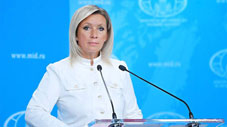
Russia has repeatedly conveyed the same message publicly. On December 4, Foreign Ministry spokesperson Maria Zakharova said Moscow is prepared to improve relations "to the extent Tbilisi is ready for it," signaling that the stalemate over Abkhazia and South Ossetia remains the defining obstacle.