Kobakhidze Says Water Cannon Additive Was Used in 2024 Crackdown, but Rejects BBC Claim of Camite Deployment
By Liza Mchedlidze
Thursday, December 4, 2025
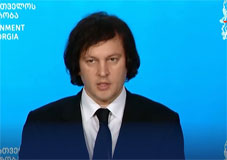
Georgian Dream Prime Minister Irakli Kobakhidze stated on December 3 that Georgian police added a chemical substance to water cannons during the November-December 2024 protest dispersals, but dismissed the BBC's suggestion that the compound was camite, a World War I era agent identified in the outlet's recent investigation.
"A substance was mixed into the water cannons. What matters is whether this substance was banned," Kobakhidze told reporters following a government briefing. He insisted that camite had never been procured by the Interior Ministry, "not even during the period of the United National Movement's rule." He declined to identify the compound used and said the State Security Service's ongoing investigation would establish the specifics.
Kobakhidze also addressed a detail highlighted in the BBC film, acknowledging that the chemical code UN 3439 cited in the reporting was accurate but stressing that the code corresponds to "dozens" of chemicals, only some of which are prohibited. "Many of the substances under that code are not banned," he said.
The government's comments come amid conflicting statements from current and former Interior Ministry officials. Georgian Dream Interior Minister Gela Geladze said on December 2 that camite was not used, while his predecessor, Vakhtang Gomelauri, said the previous evening that "the substances they are talking about" had indeed been purchased and used by the ministry, though only before 2012. Geladze later clarified that Gomelauri was referring to chemicals bought in 2009 and insisted, "Your expectations have simply led to disappointment. This is not camite."
The BBC investigation, based on testimony from chemical weapons specialists, whistleblowers within Georgia's riot police and medical personnel, suggested camite may have been deployed during the first days of pro-EU demonstrations beginning on November 28, 2024. The report revived long-standing questions raised by Georgian civil society, which has repeatedly asked the government to disclose the contents of tear gas and water cannon solutions used during the crackdown. Protesters have reported lingering health effects, including coughing, vomiting, headaches, fatigue, and breathing difficulties.
Georgian Dream officials have responded with sweeping denials, portraying the BBC's findings as an orchestrated attack. Kobakhidze called the investigation "absurd" and "a lie," claiming it was "a cheap provocation planned by foreign intelligence services." According to him, the alleged objective is to "artificially reignite protest momentum" and "continue blackmailing the Georgian people and their elected government." He said the government intends to challenge the BBC's reporting before British regulators and, if needed, in international courts.
Meanwhile, the State Security Service of Georgia has opened a probe into possible "exceeding of official powers" and potential "assistance to foreign entities." Individuals who appeared in the BBC documentary or contributed research to it have been summoned for questioning. Human rights groups say these moves resemble retaliation rather than a legitimate attempt to establish what was used during the 2024 dispersals. They continue to demand a clear public explanation from the government about the chemical mixture deployed in the water cannons.