Transparency International Georgia Warns of "Captured, Kleptocratic State" on Anti-Corruption Day
By Liza Mchedlidze
Wednesday, December 10, 2025
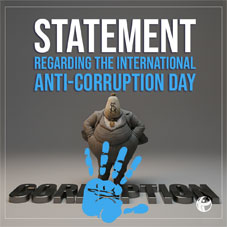
As the world marks International Anti-Corruption Day on December 9, Transparency International Georgia issued a stark assessment of the country's political environment and accused the ruling elite of transforming Georgia into what it called a fully captured and kleptocratic state.
In a statement released Monday, the organization said corruption has reached a level that threatens democratic governance and undermines every major institution in the country. "We are witnessing a system where public office is treated as a tool for private gain," a TI Georgia representative said. "Those who control the state structure have built a model that enriches a small circle while weakening the institutions meant to keep them accountable."
According to the watchdog, this dynamic is driven by a governing system centered around the influence of billionaire and former prime minister Bidzina Ivanishvili. TI Georgia argued that power is being maintained by a network of loyal individuals who allegedly benefit from corrupt practices. "The leadership has created an environment where loyalty is rewarded with impunity," the organization noted, adding that such an arrangement deepens state dependency on corrupt actors and ensures that oversight mechanisms remain ineffective.
The statement outlined multiple challenges that, in the group's view, demonstrate a deterioration of anti-corruption safeguards. One of the most critical warnings concerned the erosion of independent oversight bodies. TI Georgia said that no institution currently has the autonomy or willingness to investigate corruption at the highest levels. "There is not a single state body today that can openly confront entrenched corruption without facing retaliation," the statement asserted.
The watchdog also accused authorities of conducting what it described as a selective and politically motivated approach to corruption enforcement. According to the group, investigations have targeted internal party rivals rather than powerful officials implicated in long-standing investigative reports. "What we see is not an anti-corruption campaign," a TI Georgia analyst said. "It is a political tool used to discipline insiders who fall out of favor."
One of the most significant structural changes highlighted by the organization is the government's impending abolition of the Anti-Corruption Bureau, an institution created only three years ago. TI Georgia argued that instead of fulfilling its preventive mandate, the bureau became a pressure mechanism against civil society groups before ultimately losing its core functions. The dissolution, the organization said, leaves crucial areas such as asset declaration monitoring, political finance oversight, and whistleblower protection in worse condition than before the agency existed.
The group expressed concern about Georgia's stance toward international accountability frameworks. The statement said the government has disregarded recommendations from the European Commission and GRECO and has distanced itself from platforms such as the OECD Anti-Corruption Network and the Open Government Partnership. "Georgia is walking away from the very commitments that once helped strengthen its credibility," a TI Georgia representative commented. "This isolation will only deepen the crisis."
The absence of a national anti-corruption strategy for more than five years was cited as further evidence that the state has abandoned efforts to address systemic risks. The organization also criticized legislation that restricts cooperation between state institutions and civil society, describing it as an attack on groups that play a crucial role in uncovering elite corruption. "Civil society is being pushed out of policymaking entirely," TI Georgia said. "This undermines the fundamental principles of the UN Convention Against Corruption."
Despite the grim assessment, the organization emphasized that Georgia can still reverse course. Restoring democratic checks and balances and rebuilding independent institutions, it argued, are essential steps toward reducing corruption and reestablishing public trust. "We remain committed to working for a future where Georgia's institutions serve the public, not a privileged few," the group's statement concluded.