Georgian Dream Files Complaint with BBC Over Protest Chemicals Report
By Liza Mchedlidze
Friday, January 16, 2026
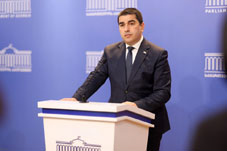
Georgian Dream party has filed a formal complaint with the BBC over an investigative report alleging that Georgian authorities used a toxic chemical compound to disperse protests in late 2024, Georgian Dream-led Parliament Speaker Shalva Papuashvili said on January 15.
Speaking at a briefing, Papuashvili said the complaint was submitted on January 14 and demands the removal of the BBC Eye investigation and related materials from all platforms, along with "a public and clear apology." He said the next step would be filing a complaint with the UK media regulator Ofcom and, if necessary, pursuing legal action in British courts.
"The absurdity of the accusations, the nature and scale of violations, and bad-faith actions lead us to think that we are dealing with a political campaign aimed at damaging the reputation of the Georgian government," Papuashvili said.
The BBC Eye investigation, published on December 1, cited chemical weapons experts, whistleblowers from Georgia's riot police, and medical professionals in suggesting that camite, a World War I-era military-grade chemical agent, may have been mixed into water cannons during the first days of pro-EU demonstrations that began on November 28, 2024.
Georgian Dream rejected the allegations and warned it would sue the broadcaster. Under media pressure, officials later acknowledged that a substance had been mixed into water cannons but denied that it was camite.
Hours after the BBC report aired, Georgia's State Security Service announced an investigation into alleged abuse of office and "assistance to a foreign organization in hostile activities." Five days later, the agency said the investigation found that police had used CS gas, a commonly used tear-gas agent, during protests on December 4-5, 2024, but did not specify whether any other substances were used on other days.
Papuashvili said the complaint argues that the BBC violated its own editorial standards and the Ofcom Broadcasting Code, particularly by committing a "gross violation of accuracy."
"The BBC presented as fact claims that Georgian law enforcement used camite without relying on any verified, independent, or reliable source," he said, adding that the report was designed to shape political narratives rather than provide balanced journalism.