Georgia Faces Sharp Criticism at UN Human Rights Review
By Liza Mchedlidze
Wednesday, January 28, 2026
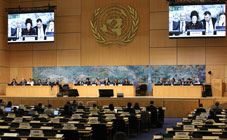
Georgia's human rights record was reviewed on January 26 in Geneva by the UN Human Rights Council's Universal Periodic Review Working Group, covering the period from 2021 to 2025.
The review took place amid growing international concern over democratic backsliding and restrictions on civil society, media, and public assembly in Georgia. Representatives from 106 UN member states took part. The final report will be prepared by Angola, Estonia, and Pakistan and adopted on January 30, after which Georgia will indicate which recommendations it accepts.
The Georgian delegation was led by Georgian Dream Deputy Foreign Minister Khatuna Totladze and included representatives of government agencies, Parliament, the Prosecutor's Office, the High Council of Justice, and the judiciary.
Dozens of countries urged Georgia to repeal the Foreign Agents law and the Georgian version of FARA, warning that the legislation undermines freedom of expression, association, and assembly. Among them were Germany, Sweden, the United Kingdom, Poland, Ukraine, Australia, and several EU member states. Multiple delegations also called for independent investigations into alleged police violence during protests and the release of journalists, activists, and opposition figures described as arbitrarily detained.
Presenting the government's position, Totladze said Georgia remains committed to human rights protection and described the country as a regional leader in several areas. She cited economic growth, anti-corruption measures, and government human rights strategies, while stressing that EU membership remains Georgia's "key foreign policy goal."
Addressing criticism, government officials rejected claims of repression. Niko Tatulashvili, head of the government's Human Rights Department, said hundreds of organizations have registered under the Foreign Agents law and continue operating. Deputy Interior Minister Aleksandre Darakhvelidze dismissed allegations of police abuse, claiming the protests that erupted in November 2024 were violent.
Several states raised concerns over human rights violations in Abkhazia and the Tskhinvali region, occupied by Russia. Totladze said Georgia is unable to implement human rights protections in those territories and blamed Russia for ongoing violations.
In a separate statement issued alongside the review, UN Special Rapporteur on Human Rights Defenders Mary Lawlor said Georgia has seen a "serious decline" in human rights, citing repression of civil society, journalists, and peaceful protesters. She called on the authorities to repeal restrictive legislation and guarantee the right to peaceful assembly.