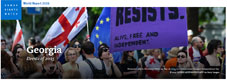
HRW World Report: Georgia's Human Rights Record 'Sharply Deteriorated' in 2025
By Liza Mchedlidze
Thursday, February 5, 2026
Human Rights Watch (HRW) has released its 2026 World Report, warning that Georgia's human rights environment suffered a significant decline over the past year. The five-page section dedicated to Georgia describes a systemic effort by the ruling Georgian Dream party to dismantle civil society and silence independent media through a "repressive era" of new legislation and police violence.
The report identifies several key legislative shifts as primary drivers of this deterioration. These include the notorious "foreign agents" law and a series of amendments to the Law on Grants that require government approval for any foreign funding. HRW asserts these measures are designed to financially undermine and intimidate non-governmental organizations and media outlets that remain critical of the government.
Beyond legislation, HRW documents a pattern of "excessive interference" with largely peaceful protests. The report cites widespread police force, arbitrary mass arrests, and reports of torture or ill-treatment of detainees. In early 2025, parliament also passed restrictive amendments to the administrative and criminal codes that extended detention for protest-related offenses from 15 to 60 days.
Freedom of the press has faced similar pressure. The report highlights the April 2025 amendments to the Broadcasting Law, which banned foreign funding for broadcasters and expanded the censorship powers of the state communications commission. HRW specifically mentions the imprisonment of journalist Mzia Amaghlobeli on what it describes as politically motivated charges, alongside the targeting of major opposition-leaning channels like Formula and TV Pirveli.
The findings also detail the targeting of opposition figures, including the conviction and jailing of political leaders on charges of "sabotage" or activities directed against the constitutional order. According to the report, the number of political prisoners increased significantly in 2025, reaching more than 80 individuals by the year's end.
International observers have noted that these developments have effectively stalled Georgia's integration with the European Union. In its November enlargement report, the European Commission described Georgia as a "candidate country in name only," while the United States and EU have previously signaled that the current legislative path is incompatible with democratic standards.
HRW concludes that these repressive policies are no longer isolated incidents but have become a "systemic practice" undermining the foundations of political pluralism in Georgia.