Parliament Launches Price Study Commission Amid Government Pressure on Business
By Liza Mchedlidze
Thursday, February 5, 2026
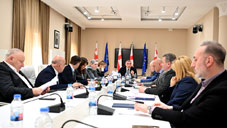
The Georgian Dream-led Parliament has officially established an interim commission to investigate the pricing of food, medicine, and fuel, marking a major escalation in the government's campaign to curb high consumer costs.
Approved on February 3, 2026, the 14-member commission is tasked with conducting a three-month objective examination of price formation. The move follows a directive from Georgian Dream Prime Minister Irakli Kobakhidze, who has publicly blamed "cartel-like" coordination and excessive markups for the rising cost of living.
The commission's membership reflects a heavy government presence, with Georgian Dream holding seven seats under the leadership of Chair Shota Berekashvili. Other members include representatives from the For Georgia party, People's Power, and the European Socialists.
The legislative probe is running parallel to a separate government commission that has spent weeks meeting with retail chains and distributors. Kobakhidze has repeatedly argued that prices are significantly higher in Georgia than in comparable European markets due to unfair business practices. He told reporters on Wednesday that the government and the business sector need to sit down together to find ways to reduce prices, noting that he believes this goal is achievable by the end of April.
However, the consultations have not been limited to boardrooms. On January 22, the State Security Service of Georgia entered several major supermarket chains and distribution companies to seize documents related to pricing. The security service stated the investigation is focused on economic security and potential criminal activity.
While the government frames the initiative as a social necessity, critics and business leaders argue it is a thinly veiled attempt to intimidate the private sector. Some analysts suggest that the disputed nature of the current parliament adds a layer of political pressure to the move, as the ruling party seeks to maintain public support through popular economic measures. Opposition figures have warned that using security services to intervene in market pricing could backfire, potentially leading to supply shortages or a decline in foreign investment.