Prepared by Messenger Staff
OSCE Moscow Mechanism Mission Begins Work on Georgia
The OSCE Moscow Mechanism expert mission on Georgia began work on February 11, two weeks after 24 countries invoked it over what they described as Georgia's "deteriorating human rights situation." The OSCE said it will accept submissions of "any relevant information" by email until February 24.
According to the OSCE, the mission will document recent developments related to human rights and fundamental freedoms in Georgia, assess their impact on civil society, media freedom, the rule of law, judicial independence, and political pluralism, and issue recommendations to address identified concerns.
The Georgian Young Lawyers' Association (GYLA) said it submitted seven thematic reports to the mission, describing what it called a broad pattern of human rights violations and democratic backsliding since spring 2024. The reports cover the violent dispersal of protests, cases of ill-treatment and arbitrary detention, allegations of torture and impunity, ineffective investigations, and the use of chemical mixtures in water cannons, which GYLA said requires an independent investigation.
Georgian Dream officials rejected claims of human rights deterioration. Parliamentary majority leader Irakli Kirtskhalia said foreign institutions meant to promote cooperation were being used "to punish undesirable political opponents," and claimed that human rights in Georgia are "better protected" than in most of the countries that invoked the mechanism.
This is the first time the OSCE Moscow Mechanism has been applied to Georgia. Since its creation in 1991, it has been used 16 times, most recently in cases involving Belarus, Russia, and abuses linked to Russia's war against Ukraine.
The move follows an earlier OSCE procedure. In December 2024, 38 countries invoked the Vienna Mechanism, requesting explanations from the Georgian government over human rights concerns amid pro-EU protests. The OSCE said that concerns only deepened after Georgia's response.
Ahali Leader Nika Gvaramia Released After Eight Months in Prison
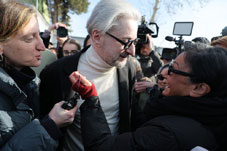
Nika Gvaramia, leader of the opposition Ahali party, was released from Rustavi prison on February 12 after serving an eight-month sentence for refusing to appear before the Georgian Dream parliament's temporary investigative commission, known as the Tsulukiani Commission.
Gvaramia was arrested in June after declining to post bail in the case. The commission had summoned him for questioning as part of an investigation into alleged crimes by former officials, a body that Gvaramia and other opposition figures do not recognize as legitimate.
Speaking after his release, Gvaramia said he could not feel free while other opposition politicians remain jailed.
"I'm happy to see my family, but I feel uncomfortable knowing that people are still in prison," he said. "Without these people, victory will be very difficult, if it's possible at all. We have to get them out very soon."
Gvaramia is also among opposition leaders charged in a separate sabotage case, which carries a potential prison sentence of two to four years.