Georgia Passes New Restrictions on Foreign Funding and Political Activity
By Messenger Staff
Thursday, March 5, 2026
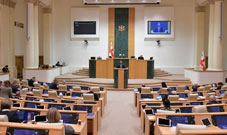
The Georgian Dream-led parliament has approved a sweeping legislative package that significantly tightens control over foreign grants, political participation, and business activities. These measures, passed in a final hearing by the Georgian Dream-led legislature, introduce criminal penalties for a wide range of actions previously considered standard civil or political engagement.
The updated laws fundamentally change how money from abroad can be used within the country. The definition of a grant now includes not just financial transfers, but also technical assistance, the sharing of specialized knowledge, as well as free services. Under the new rules, any funds or assistance intended to "influence domestic or foreign policy" must receive government approval. This requirement extends to foreign organizations working on issues related to Georgia and even to the local branches of international entities.
Violations of these grant rules can lead to six years in prison, while those found guilty of using sham agreements to bypass the law face similar criminal charges. The Audit Office will now oversee the implementation of these rules, which notably apply retroactively to unused funds received before the legislation was passed.
The package introduces a new crime termed 'external lobbying'. This carries a prison sentence of up to six years for anyone providing money or property to a foreign citizen or entity in exchange for carrying out political activities related to Georgia. Organizations found in violation of this clause may face liquidation in addition to heavy fines.
Political parties and individual activists face the strictest new hurdles. The law replaces the specific concept of an electoral goal with a much broader party-political goal. This change allows the government to apply strict financial controls to groups that are not registered parties but are deemed to resemble them in their actions.
Specific restrictions include an eight-year ban on party membership for individuals who earned a salary from organizations receiving more than 20% of their funding from abroad. Additionally, the heads of political parties that receive any foreign funding can face up to six years in prison. Failing to submit a financial declaration or providing incorrect information can also lead to a three-year ban on holding office.
The legislation also targets the private sector, banning businesses from engaging in political activities unrelated to their primary commercial work. Companies that break this rule face heavy fines, while repeat offenders could see their leaders imprisoned for up to three years.
Finally, a new 'extremism clause' has been added to the Criminal Code, penalizing systematic acts intended to create a perception that the government or constitutional bodies are illegitimate. This includes public calls for mass disobedience or the presentation of oneself as an unauthorized government representative. Those convicted face up to three years in jail, and the motivation of non-recognition of the government authority will now serve as an aggravating factor in sentencing.