Opposition Reacts to OSCE Moscow Mechanism Report
By Messenger Staff
Monday, March 16, 2026
Opposition politicians in Georgia say a new report prepared under the OSCE Moscow Mechanism delivers one of the most severe international assessments of the ruling Georgian Dream government.
The report, published by the Organization for Security and Co-operation in Europe, reviews developments in Georgia since spring 2024 and concludes that democratic backsliding has taken place. According to the document, violence against demonstrators, political opposition leaders, and journalists has occurred alongside impunity for perpetrators. It also says the government has gradually restricted freedom of expression and assembly by adopting legislation targeting civil society, opposition groups, independent media, and the LGBT+ community. The report recommends repealing several laws regulating foreign funding, including the Foreign Influence Transparency Act, the Foreign Agents Registration Act, and the Grants Act.
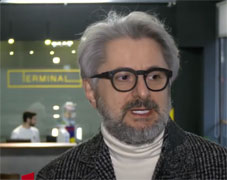
Nika Gvaramia, one of the leaders of the Coalition for Change, said the findings place the government in a difficult position. "This report is the most severe for 'Georgian Dream' and it shows on their faces too," he said. Gvaramia added that the issue of Georgia could see further international discussion, including at a meeting of EU foreign ministers.
"There is not just a chance, but a real precondition for taking the case to the Hague court," he said, warning that the government's response could worsen the situation. He also commented on a resolution by the European Parliament, saying the opposition would not negotiate over the issue of political prisoners. "The issue of political prisoners requires no review or trading. We do not intend to trade in political prisoners and sit at the table in order to obtain for them a right that they already have anyway," Gvaramia said.
Levan Tsutskiridze, leader of Freedom Square, said the government fears the report's conclusions. "Georgian Dream is afraid of the truth and of what will inevitably happen, namely the restoration of justice," he said. Tsutskiridze also criticized what he described as shifting statements from government officials about the report and warned public officials not to follow the government "on the path leading to the Hague Tribunal."
Gigi Tsereteli, leader of European Georgia, said the use of the Moscow Mechanism itself signals serious concerns about democracy and human rights in the country. "Everyone clearly understands that the invocation of such a mechanism occurs only in countries with grave violations of democracy and human rights, and Georgia has precisely ended up in the ranks of those countries," he said. Tsereteli warned that attempts to dismiss the report could lead to further consequences, including possible sanctions.
Grigol Gegelia, international secretary of Lelo - Strong Georgia, described the report as the most critical international assessment of Georgia to date. "This conclusion made it clear that a dictatorship is established in Georgia today," he said.
According to Gegelia, the report examines a wide range of issues, including election integrity, human rights violations, and political pluralism. He said the government should respond by releasing political prisoners and beginning discussions on new parliamentary elections.
"If the Dream has any sense and self-preservation instinct left, the first thing it should do is release political prisoners," Gegelia said. He added that authorities should also start discussions on holding new parliamentary elections and implement the recommendations made in the report.