Prepared by Messenger Staff
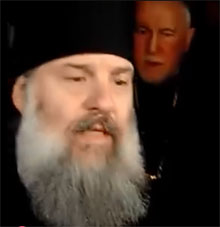
Patriarch Ilia II Dies at 93
Ilia II, who led the Georgian Orthodox Church for nearly five decades, has died at the age of 93.
The announcement was made late on March 17 by Shio Mujiri at the Caucasus Medical Center in Tbilisi, where the Patriarch had been in intensive care after being hospitalized with severe bleeding.
"He was an epochal figure. This is a great loss for the Orthodox Church worldwide," Shio said. "Through him, through his labors, God brought Georgia back to the faith."
Ilia II became Patriarch in 1977 and led the Church through major periods in Georgia's history, including independence in 1991. Under his leadership, the Church grew into one of the country's most influential institutions and remains widely trusted.
His tenure also included controversies, including internal disputes, political involvement, and criticism over the Church's privileged position.
Shio, who was named locum tenens in 2017, will lead the Church until a new Patriarch is elected.
Israeli Embassy in Georgia Says Iranian Missile Debris Fell Near Holy Sites in Jerusalem
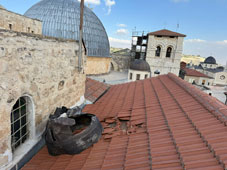
The Embassy of Israel in Georgia said Iran launched missiles toward Jerusalem on March 16, with fragments reportedly falling near major religious sites in the city's Old Town.
In a statement, the embassy said debris landed in areas surrounding the Al-Aqsa Mosque, as well as near the Church of the Holy Sepulchre and the Western Wall.
"Last night, during the Muslim holy month of Ramadan, the Iranian regime once again fired missiles toward Jerusalem and the holy sites of the three religions in the Old City," the statement said. "This time, missile debris struck within the Al-Aqsa Mosque compound, the Church of the Holy Sepulchre compound, the Temple Mount, and near the Western Wall."
The embassy said the incident put civilians and religious landmarks at risk in a city shared by Jews, Muslims, and Christians.
"The Iranian terrorist regime is targeting Jerusalem, a city where more than one million Jews, Muslims and Christians live, thereby directly putting at risk civilian population and the holy sites of the three religions," the statement said.
It also criticized the timing of the attack. "The fact that the Ayatollah regime chose to fire missiles during the holy Muslim holiday at sites sacred to Islam demonstrates its cynical disregard for anything holy or sacred," the statement said.
The embassy rejected claims that Israel restricts Muslim worship at holy sites and said such accusations are unfounded.
"Israel protects the holy sites of all worshipers and uses all necessary defensive means to prevent harm to all worshipers and all sacred places," the statement said.