Georgia Sidelined From NATO Summit's Main Agenda for Second Year Running
By Messenger Staff
Wednesday, July 8, 2026
Georgian Dream Foreign Minister Maka Botchorishvili is traveling to Ankara for a sidelines gathering during NATO's annual summit, but critics say Tbilisi's absence from the summit's core meetings marks a second consecutive year of being shut out of the alliance's main proceedings.
The summit runs July 7-8 in the Turkish capital, centered on defense spending, industry buildup, and backing for Ukraine, drawing officials from NATO members, allies, and partner nations. Reported attendees among non-members include Ukrainian President Volodymyr Zelenskyy, South Korean President Lee Jae Myung, ministers from Australia, New Zealand, Japan, Bahrain, Kuwait, Qatar, and the UAE, along with European Council President Antonio Costa and European Commission President Ursula von der Leyen. Georgia isn't among them this time, despite having sent then-Foreign Minister Ilia Darchiashvili to both the 2023 Vilnius and 2024 Washington summits.
The snub follows a broader slide in Tbilisi's standing with Western institutions amid concerns over democratic backsliding. NATO chief Mark Rutte noted in his 2025 annual report that cooperation with Georgia had been scaled back following the 2024 elections and what came after, telling reporters the alliance holds "serious worries" about the country's direction and calling for a return to a pro-EU path.
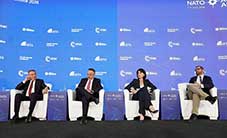
Georgia's Foreign Ministry said on July 6 that Botchorishvili will attend the "Allies in Ankara" gathering, organized jointly by Turkey's communications directorate, the SETA think tank, and the Munich Security Conference. It runs alongside the summit and includes panels on defense issues, but stands apart from NATO's official program.
Former Defense Minister Tinatin Khidasheli, now head of the Civic Idea think tank, said the exclusion tracks a pattern that started after Washington in 2024, when Georgian officials were already being kept from partnership events over democratic concerns. She described NATO-Georgia ties as now "effectively frozen" under the current government, adding that Georgia doesn't appear anywhere in the summit's briefing materials or agenda.
The Diplomatic Society of Georgia, made up of former diplomats critical of the ruling party, pointed to the Washington summit's final communique as the turning point, since it referenced Georgia only regarding its occupied territories while leaving out any mention of membership or reform. The group said Georgia went unmentioned again at the 2025 summits in the Hague and Ankara, and argued that a sidelines appearance doesn't carry the same diplomatic weight as a seat at NATO's official sessions, "where Allied leaders and partners discuss issues of strategic importance."
The opposition Droa party had previously warned that Georgia is losing its place at forums where regional security decisions get made.
Georgian Dream representatives dismissed the criticism. Deputy Speaker Giorgi Volski called it a "propaganda campaign," insisting no non-member country received an invitation to Ankara and that the old side-meeting format tied to NATO summits has been replaced this year by the Munich Security Conference event, where the foreign minister is set to speak. Majority leader Irakli Kirtskhalia responded to questions about the absence of an invitation, saying, "When we are not invited somewhere, we give very little thought to the matter."