Prepared by Messenger Staff
De Facto Tskhinvali Foreign Minister Says Resolving Relations With Georgia Is in Its Interest
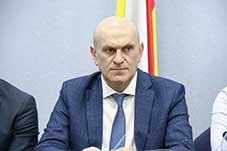
Akhsar Dzhioev, the de facto foreign minister of Georgia's Russian-occupied Tskhinvali region, said resolving relations with Georgia is in the interests of both sides.
In an interview with Russian media, Dzhioev said Georgia had yet to accept what he called the "new geopolitical reality" created after the August 2008 war. He said recognizing "South Ossetia" and Abkhazia and establishing relations with them would also serve Georgia's interests.
Dzhioev accused Tbilisi of sending mixed messages on peace, saying that alongside statements supporting peace, Georgian officials sometimes use what he described as provocative rhetoric.
He also criticized Georgia for refusing to sign a legally binding agreement on the non-use of force against "South Ossetia" within the Geneva International Discussions. Dzhioev said this position does not help build trust or strengthen stability in the region.
"We support a dialogue based on equality and respect in the negotiation process," Dzhioev said.
GYLA Calls Ban on Lasha Bugadze Novel in Prison Censorship
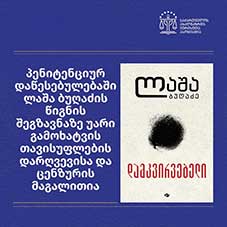
The Georgian Young Lawyers' Association (GYLA) said the refusal to allow Lasha Bugadze's novel The Observer into a penitentiary violates freedom of expression and amounts to censorship.
The Special Penitentiary Service rejected the book, saying its title created ambiguity about its content and that unclear literature could threaten prison security or its normal operation.
GYLA said the decision does not meet international human rights standards, including European Court of Human Rights case law, which requires authorities to identify specific problematic content and show a clear link to a legitimate security concern.
"An abstract reference to the title of a book grossly violates the above-mentioned standard," GYLA said.
The group noted that The Observer is a dystopian novel about decades of authoritarian rule in Georgia and said the decision raises concerns that the book was restricted because of its political content.