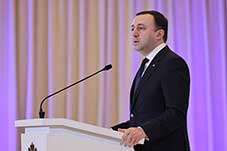
Gharibashvili Publishes New Letter, Questions Death of Human Rights Defender
By Messenger Staff
Wednesday, September 2, 2026
Imprisoned former Prime Minister Irakli Gharibashvili has published a new letter accusing former Georgian Dream leadership of wrongly suspecting him over a critical news article, and questioning the death of the man interviewed in that article.
Gharibashvili says the public now accepts his earlier letter was genuine and that its contents were true. He says Mamuka Mdinaradze made "grave and gross mistakes" that led not only to his removal from office but to his exit from politics altogether. Still, he argues that Mdinaradze's departure "cannot erase the grave and irreparable damage" he says was done to the country, the public and Georgian Dream through the actions of Mdinaradze and Prime Minister Irakli Kobakhidze.
He says he wants to clarify what the first paragraph of the letter sent to him meant when it referenced journalist Dito Chubinidze, Irma Inashvili and the doubts raised by their activism. On that point, he says Inashvili herself has already explained that he "had no contact and do not have any contact with their political or journalistic activities." Gharibashvili says he might not have addressed Chubinidze's articles at all had he not learned "a shocking fact" by chance a few days earlier, which is why he decided to share additional information tied both to the letter sent to him by the government and to an incident from February.
He explains that on February 12, at the direction of Kobakhidze and Mdinaradze, he was sent an article from the newspaper Asaval-Dasavali dated February 2, 2026. In it, Chubinidze interviewed former human rights defender Lazare Jorbenadze, in a piece he describes as "mainly devoted to criticism of Kobakhidze" and to serious accusations against him.
Gharibashvili says he received a "pretentious message" raising suspicion, based on what he calls "an absolutely false perception," that he was behind the article. He says he is deliberately leaving out further details, though the core accusation was that officials "saw my traces behind such critical articles." He describes his reaction as "extremely negative," saying he told them not to bring similar complaints to him again and that such "commissioned articles are not my signature" but are "characteristic of them." He adds that the same accusations were later "often repeated on the air" by the broadcaster Obiektivi.
He says the full picture is now clear, including why the letter listed "supporters like Dito Chubinidze and Irma Inashvili" as having raised serious doubts that "greatly damaged the interests" of the Kobakhidze-Mdinaradze team.
Gharibashvili says none of this would likely have been worth making public if he had not learned, by chance, that Jorbenadze died by suicide "some time after" the article was published. He adds that Asaval-Dasavali itself has "openly asked questions" about Jorbenadze's death and has "questioned his version of suicide."
He says the question that "must be answered" is what actually caused Jorbenadze's death. Gharibashvili says he is asking publicly because, in his words, society still has "unanswered questions" about the suicides of "numerous people" that occurred "during the Kobakhidze-Mdinaradze administration."
He does not, however, provide evidence in the letter establishing that Jorbenadze's death was anything other than suicide or alleging specific responsibility for it.