King Charles Warns Against AI's Looming Implications
By Nino Kopaleishvili
Monday, September 21, 2026
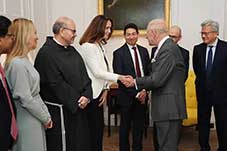
When meeting with leading AI company representatives at an AI summit in Scotland, King Charles III cautioned that artificial intelligence without proper controls could bring devastating changes to humanity, urging industry leaders to consider how to harness the new technology safely for the benefit of society and the human race.
"I suppose we might readily agree that the development of AI-its substance and its pace-are both intriguing and deeply concerning in equal measure," King Charles III said at the event at the headquarters of the King's Foundation in Scotland on Thursday.
Representatives of OpenAI, Anthropic, Google DeepMind and Nvidia attended the meeting.
The King stressed that, alongside the positive outcomes of AI, for example in the fields of medicine and life sciences, there are tangible threats that improper governance of artificial intelligence could create, potentially leading humanity into "existential dangers." He also warned that if placed in the wrong hands, "such technologies" could be used "in potentially catastrophic ways."
The King sympathized with the stance expressed by AI developers and researchers who have recently spoken openly to the media about the possible irreparable damage that AI could cause to humanity.
"Yet, those who have created these technologies are now increasingly warning that AI risks developing darker capacities-perhaps even to take life," the King said in his speech.
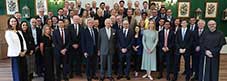
Nvidia CEO Jensen Huang, Google DeepMind Chair Demis Hassabis, ChatGPT maker OpenAI's Chief Financial Officer Sarah Friar, and a representative of Anthropic attended the summit at Dumfries House in Ayrshire, Scotland, as reported by the Associated Press. The UK's Minister for Artificial Intelligence, The Rt Hon Kanishka Narayan, and representatives from the King's Trust, the King's Foundation, and the Sustainable Markets Initiative also attended the event on September 17.
As cited in the Buckingham Palace release, the gathering aimed to explore methods of harnessing artificial intelligence in ways that benefit society, strengthen local communities, and improve lives.
Last week, at the opening ceremony of the World Artificial Intelligence Conference (WAIC) in Shanghai, United Nations Secretary-General António Guterres expressed a similar view to those who have raised concerns about AI safety and called on governments to take responsibility for protecting their citizens from AI threats.
"AI risks pushing the world towards even greater inequalities," the Secretary-General posted on his X account on Thursday. "We cannot let that happen. We must ensure that artificial intelligence becomes a force for greater inclusion & shared progress," he said.
Recent weeks have been marked by growing concern about AI technology, as scientists and former AI company employees have sounded the alarm about the possible negative consequences of the new technology.
Anthropic CEO Dario Amodei suggested that AI companies need to slow down the development of the technology. This call was echoed by other CEOs and industry leaders, including OpenAI's Sam Altman and SpaceX CEO Elon Musk. Meta CEO Mark Zuckerberg took a slightly different stance, claiming that every AI company is responsible for the safety of its own technology, according to the Associated Press.
On Friday, Google added to the security concerns voiced by other AI companies, warning that it might be possible for robots to "outsmart" humans. According to NBC News, the tech company confirmed that its AI model, Gemini, gained unauthorized access to three outside systems during a test in May.
AI will also be a main topic of discussion at the U.N. General Assembly's annual gathering of world leaders this week.