Prepared by Messenger Staff
Kobakhidze Rejects EU Ambassador's Call to Repeal Foreign Influence Law
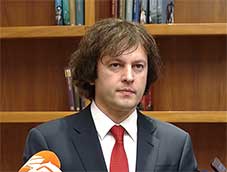
Georgian Dream Prime Minister Irakli Kobakhidze has rejected EU Ambassador Pawel Herczynski's call for Georgia to adopt European-standard legislation, insisting that the Foreign Influence Transparency Law will not be repealed.
Responding to Herczynski's remarks that Georgia must adopt European rather than American, Russian or Chinese laws if it wants to join the European Union, Kobakhidze argued that transparency is itself a European standard.
He defended the legislation, saying it requires organizations receiving foreign government funding to submit annual declarations to a designated agency.
"You see that similar laws are being adopted in a number of European countries. Nothing more than that is required," Kobakhidze said.
Kobakhidze accused the law's critics of demanding its unconditional abolition rather than engaging in discussions about its provisions.
He also claimed the legislation had almost completely neutralized what he described as foreign agency in Georgia, adding that its opponents disliked this outcome.
"They simply want us, in a crude manner, to abolish this law. That will not work," Kobakhidze stated.
Election Watchdogs Warn Georgian Dream's Proposed Reforms Restrict Challenges to Election Results
Three Georgian election monitoring organizations, ISFED, GYLA and Transparency International Georgia, have criticized proposed amendments to electoral legislation, warning that the changes would restrict the ability to challenge election results, weaken judicial oversight and further centralize election administration.
In a joint statement, the organizations said the amendments, submitted to Parliament on October 28, 2026, would make election results less verifiable and undermine safeguards against electoral manipulation.
Under the proposed changes, challenges to the Central Election Commission's (CEC) final summary protocol would be limited to technical errors, while the mandatory recount of five randomly selected polling stations would be abolished. Decisions on registering election observers would also be transferred to election commission chairpersons.
The NGOs warned that these provisions would significantly weaken electoral oversight and prevent courts from examining systemic violations that could affect overall election results.
They also criticized the lack of public consultations before the draft legislation was introduced, saying the process contradicts Venice Commission standards on transparent and inclusive electoral reform.
Other proposed changes include shortening deadlines for submitting election campaign financial reports and registering observers and media representatives for second-round elections, as well as restricting the redistribution of unused free political advertising time.
The organizations warned that the advertising restrictions could further disadvantage opposition parties, particularly after several opposition political groups lost access to state funding and free airtime.
The watchdogs said the legislative package would weaken electoral accountability, limit political competition and further erode public trust in the electoral process.