Kallas Says Future EU-Syria Agreement Must Address Recognition of Georgia's Occupied Territories
By Messenger Staff
Wednesday, November 18, 2026
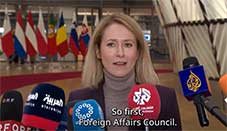
EU foreign policy chief Kaja Kallas said a future, updated Association Agreement with Syria must include clear conditions on human rights and the non-recognition of the occupied territories of Georgia and Ukraine, which were recognized by the former Assad regime.
Speaking at a press conference following a meeting of EU foreign ministers, Kallas said member states had raised several conditions for the agreement, with EU working groups now examining the related technical and legal details.
She noted that negotiations on an EU-Syria Association Agreement had taken place in 2008 and that updating the document would take time. As a compromise, she said, the EU could first sign the 2008 agreement, which would provide a framework for cooperation while work continued on a modernized version.
"Ministers from member states have raised several points-for instance, the need for clear conditions regarding human rights. Furthermore, there must be a stance of non-recognition concerning the occupied territories of Ukraine and Georgia-territories that the Assad regime has recognized," Kallas said.
Giorgi Gakharia, leader of the opposition party Gakharia for Georgia, welcomed Kallas' remarks, saying the EU's position reaffirmed its support for Georgia's sovereignty and territorial integrity.
"I welcome the clear statement by EU High Representative Kaja Kallas that the Association Agreement between the European Union and Syria must include strict conditions, including the non-recognition of the occupied territories of Georgia and Ukraine," Gakharia wrote on social media.
He accused Georgian Dream of undermining the country's relations with strategic partners and its policy of securing international non-recognition of the occupied territories. Gakharia also criticised the ruling party over what he described as its attempts to blame Georgia for starting the 2008 war and the court case against him over the establishment of a police checkpoint on territory controlled by the Georgian government, which he said was intended to prevent creeping annexation.
"Georgia's true partners continue to firmly defend our sovereignty and territorial integrity," he wrote, thanking European partners for defending Georgia's national interests even when, in his view, the country's government acts against them.